What is clinical investigator vetting?
Clinical investigator vetting is the due-diligence check a trial sponsor or CRO runs on a physician and their site before engaging them to conduct a clinical trial — specifically, the check of the investigator’s FDA record that belongs in the site-selection file before the Form FDA 1572 is signed.
In day-to-day use the same check goes by other names: principal investigator (PI) vetting, or a review of a PI’s compliance history. The regulations say “investigator”; this site says clinical investigator wherever the bare word could mean either person.
Watch the walkthrough. A narrated tour of the FDA record and how to read it.
Why sponsors do it
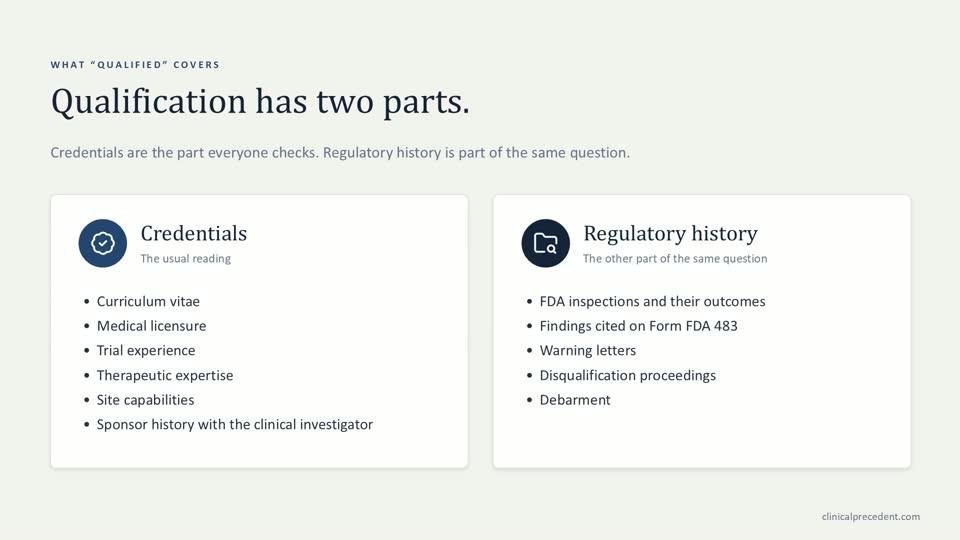
The obligation sits with the sponsor. Under 21 CFR 312.53, a sponsor must select only clinical investigators “qualified by training and experience as appropriate experts” to investigate the drug, and ICH (E6) makes the same selection responsibility explicit. Qualification is usually read as credentials — CV, licensure, trial experience — but an investigator’s regulatory history is part of the same question: FDA may have inspected them before, cited them, sent a warning letter, opened disqualification proceedings, or debarred them. If any of that surfaces after site activation, it becomes the sponsor’s problem: enrollment delays, data credibility questions in a marketing application, or a repeat finding at the sponsor’s own inspection.
Vetting and a clinical investigator background check
A clinical investigator background check usually means the credentials portion of qualification: the CV, medical licensure, training and trial experience. Sponsors and CROs run it as a matter of course, and it belongs in the site-selection file. Vetting is a separate piece: what FDA found when it inspected. The two answer different questions — is this physician qualified to run the study, and how has FDA classified the studies they have already run — and neither substitutes for the other. A current license says nothing about an Official Action Indicated inspection three years ago.
What a thorough vet covers
Five checks, from broadest to most severe, and one for context:
A record, not a score
Site-selection platforms often fold “compliance history” into a proprietary site score or a red flag. That answers a ranking question, but not a due-diligence one: a score can’t go in the site-selection file, and it can’t be defended to an auditor or an inspector who asks why a site was chosen. Vetting produces a documented record — what FDA found, when, and how it resolved — that a quality team can review, file, and stand behind. See what to assemble before signature: Form 1572 due diligence.
How Clinical Precedent does it
Clinical Precedent is a clinical investigator vetting platform: it assembles the FDA Bioresearch Monitoring record — every clinical investigator inspection FDA has recorded since 2009, sponsor/CRO and IRB inspections, each finding FDA cited at the cited-regulation level, warning letters with their full text where available, disqualification proceedings with the NIDPOE and NOOH letters where they are still available, and the debarment list — into one check, benchmarked against the rest of the dataset, with the underlying documents one click away. It reports the record; it does not make recommendations or provide regulatory advice.
Questions this page answers
What is clinical investigator vetting?
It is the due-diligence check a sponsor or CRO runs on a clinical investigator’s FDA record before the Form FDA 1572 is signed: inspection history with each classification, the findings FDA cited, warning letters, disqualification proceedings and debarment. The result belongs in the site-selection file.
Is clinical investigator vetting the same as a background check?
No. A clinical investigator background check usually covers credentials: the CV, medical licensure, training and trial experience. Vetting covers the regulatory record: what FDA found when it inspected the clinical investigator or the site. A sponsor needs both, and neither substitutes for the other.
Is this the same as principal investigator (PI) vetting?
Yes. Principal investigator vetting, PI vetting and a review of a PI’s compliance history are everyday names for the same check. FDA’s regulations use the word investigator; this site says clinical investigator, because an FDA investigator is also the agency employee who conducts inspections.
When should a sponsor vet a clinical investigator?
During site selection, before the Form FDA 1572 is signed, so that the record is part of the decision and the dated check is in the site-selection file. Because FDA classifies an inspection weeks to months after it closes, a record can change during a trial; re-checking active sites periodically catches that.
Does FDA tell a sponsor about a clinical investigator's inspection history?
Not typically. FDA sends inspection findings to the clinical investigator, not typically to the sponsor, and the clinical investigator is not required to report an inspection to the sponsor unless a quality agreement between them says so. FDA does notify the sponsor and the IRB when a clinical investigator is disqualified.
Related reading: clinical investigator selection · clinical investigator inspection history · clinical investigator deficiencies · FDA inspections of clinical investigators · OAI, VAI and NAI, explained · warning letters to clinical investigators · Form 1572 due diligence · debarment vs. disqualification · NIDPOE letters, explained · inspection statistics · all guides